No contractFree number transfer30-day money-back guarantee

See every price
Finish

911 knows where.
Your people know when.

Every line sends a checked address with a 911 call, down to the suite or the desk. And the moment someone dials 911, the people you choose are told: building security, a coworker, or family.

When someone dials 911

Four things happen, set up in one place.

911 gets the address, a dispatcher can call back on the location’s number, your people are told, and the call can be recorded. Company settings shows all four, and what’s left to do.
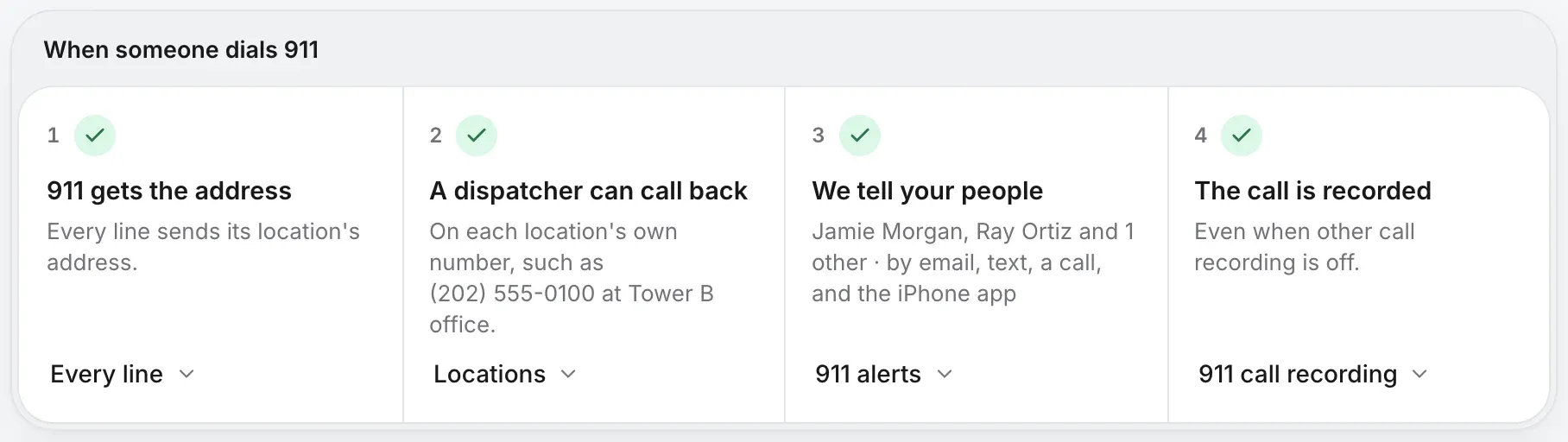
When someone dials 911, four steps set up: 911 gets the address, a dispatcher can call back, we tell your people, the call is recorded
The address

Each place, down to the desk.

A landline’s address is tied to the wire. An internet phone can move, so the address is something you give us, and we check it as you type. Give each office or building its own, and each line sends the one it’s in.

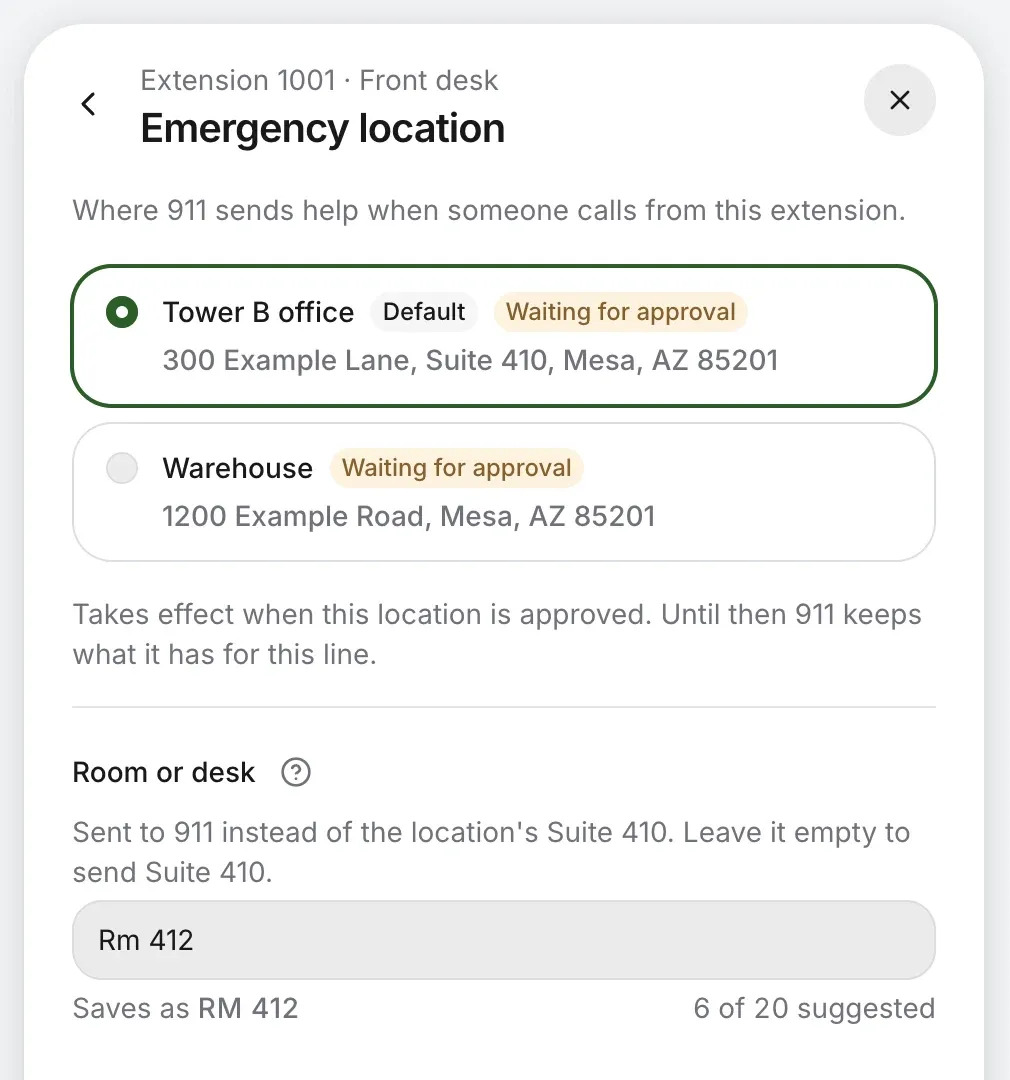
In a big building, add the room or desk to a line, like RM 412, so help finds the right door. A new or changed address is reviewed before 911 uses it, within 24 hours.
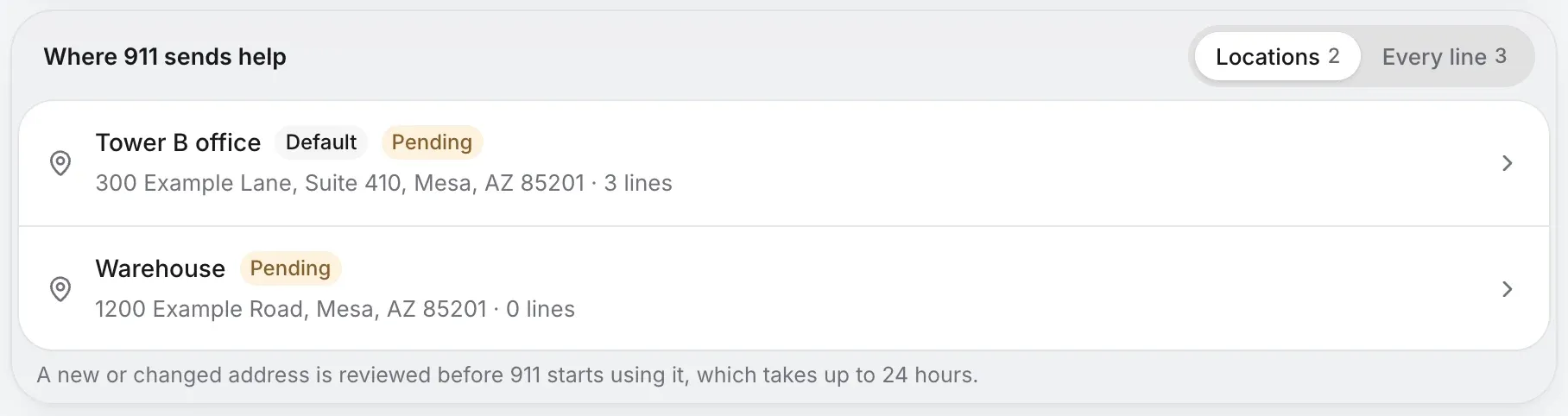
Where 911 sends help: Tower B office at 300 Example Lane, Suite 410, and the warehouse, each address reviewed before 911 uses it
An extension’s emergency location: Tower B office, with the room or desk RM 412 sent to 911 in place of the suite
911 alerts

The people nearby know at once.

The lobby’s security desk can meet the ambulance at the door. The office manager knows to go and help. Choose who’s told, and how, for each building or for all of them.
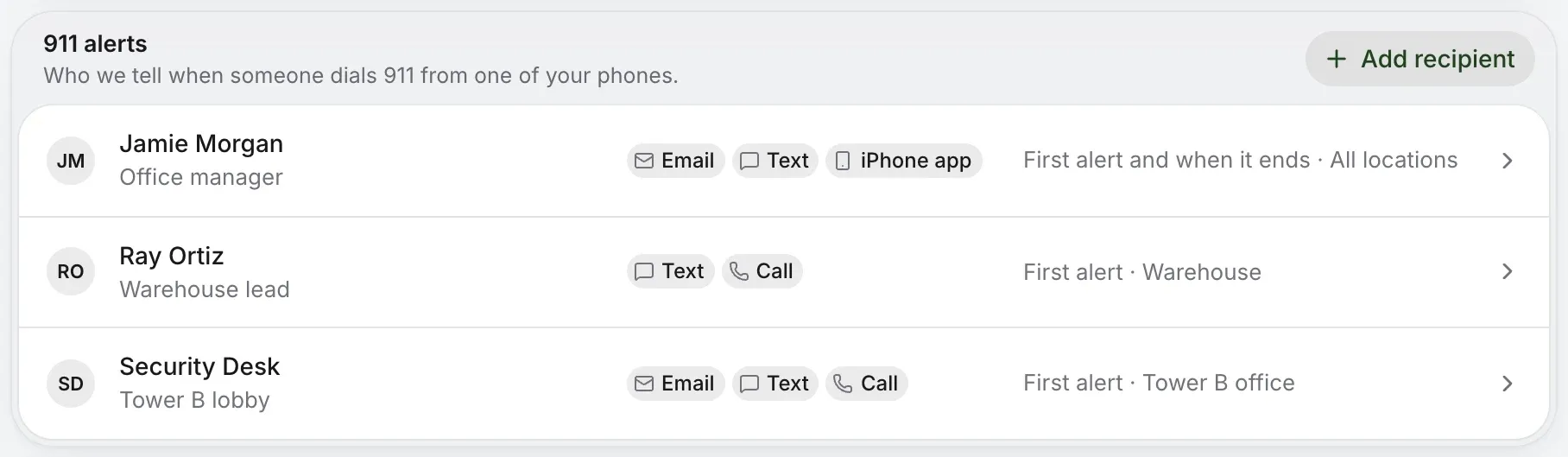
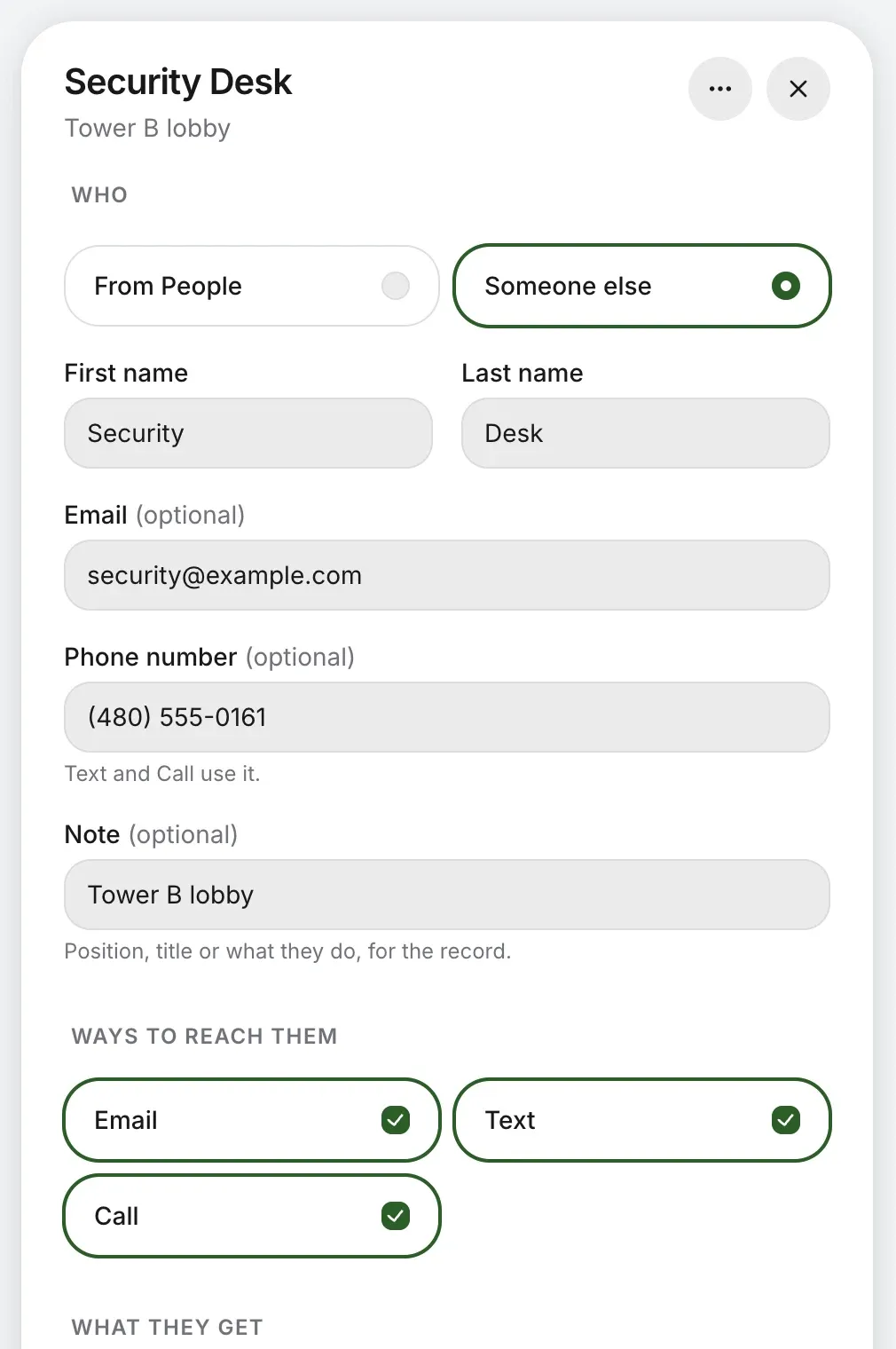
911 alerts: the office manager by email, text and the iPhone app at every location, a warehouse lead by text and a call, and the Tower B security desk
  • As soon as 911 is dialedNot when it’s answered, so a call that never connects still alerts.
  • Email, text, a call or the appCoworkers on their iPhone, a security desk on its desk line, anyone by email.
  • What every alert saysThat 911 was dialed, from which line, the address sent and the number to call back.
  • When it ends, if you likeA second alert with how long the call lasted, and its recording by email.
  • Each building its ownA security desk hears only of its own building; managers can hear of all.
  • Send a testEach recipient gets a test over every way you chose, so nobody’s first alert is a real one.
A 911 alert recipient from outside the company: the Tower B lobby security desk, reached by email, text and a call
The call itself

Record every 911 call, with nothing in the way.

Turn it on, and every 911 call is recorded, even when other recording is off. No recording announcement plays first to hold the call up.

Record 911 calls, on: always recorded, even when other call recording is off, with no announcement to delay the call
At home

The family knows too.

Every home line keeps a checked address for 911. And when someone at home dials it, the people you choose are told: a daughter across town, a neighbor next door.
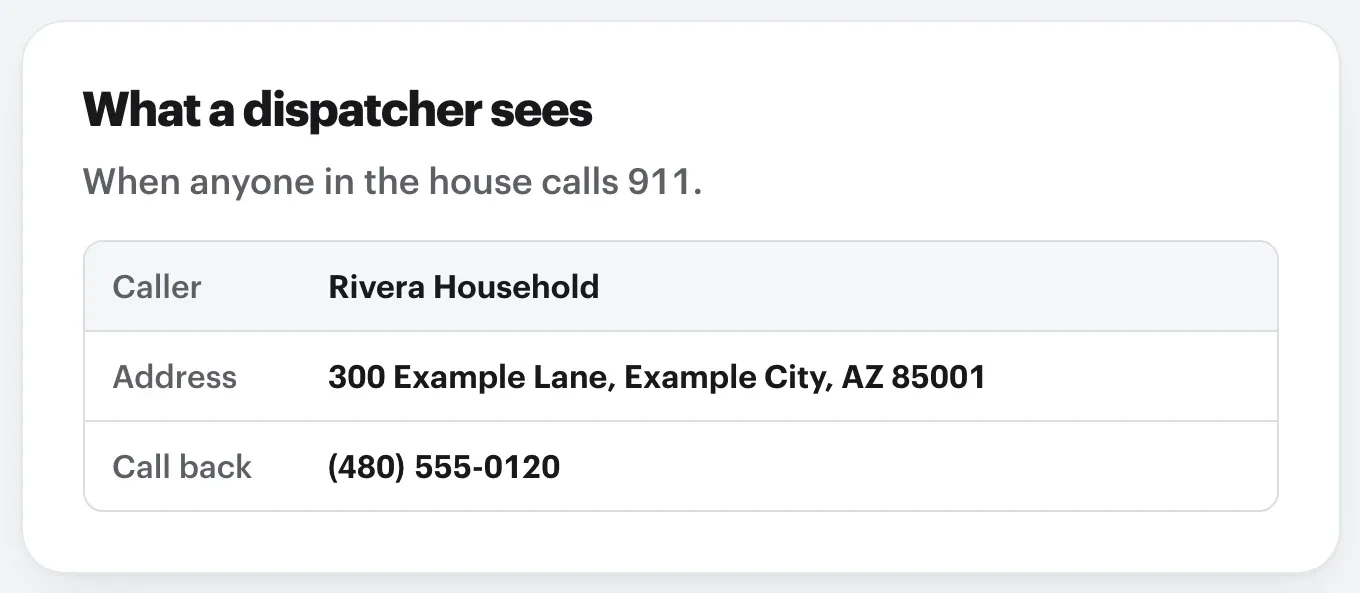
911 alerts for families

What a dispatcher sees when anyone at home calls 911: the household, the address and the number to call back

Questions about 911.

What if we move, or open a new office?
Add the new address before you use the phones there. A new or changed address is reviewed before 911 uses it, which takes up to 24 hours.
Does the app call 911 too?
Use your cell’s own dialer for 911 when you’re away from your registered address, so your location goes with the call.
Who can be told when 911 is dialed?
Anyone you choose: people on the account, or someone outside it, like a building’s security desk. Up to 25, each by email, text, a call or the iPhone app.
Are alerts sent if the call doesn’t connect?
Yes. The first alert goes as soon as 911 is dialed, not when it’s answered.
Is this for homes too?
Yes. Every home line keeps a checked address, and a family can be told when someone at home dials 911.

Help knows where. Your people know when.

Check your number, and set the address and who to tell when you sign up.

No number yet? Pick a new one

Rather talk it through? Write to us and a person answers.