Keep the number, lose the spam.
Check your number in a few seconds. You’ll know it can come before you pay anything.
Rather talk it through? Write to us and a person answers.
Kafono vs. a landline
Both ring the phone on your kitchen table. Here’s where Kafono does more, where a landline still has the edge, and who should wait before switching.
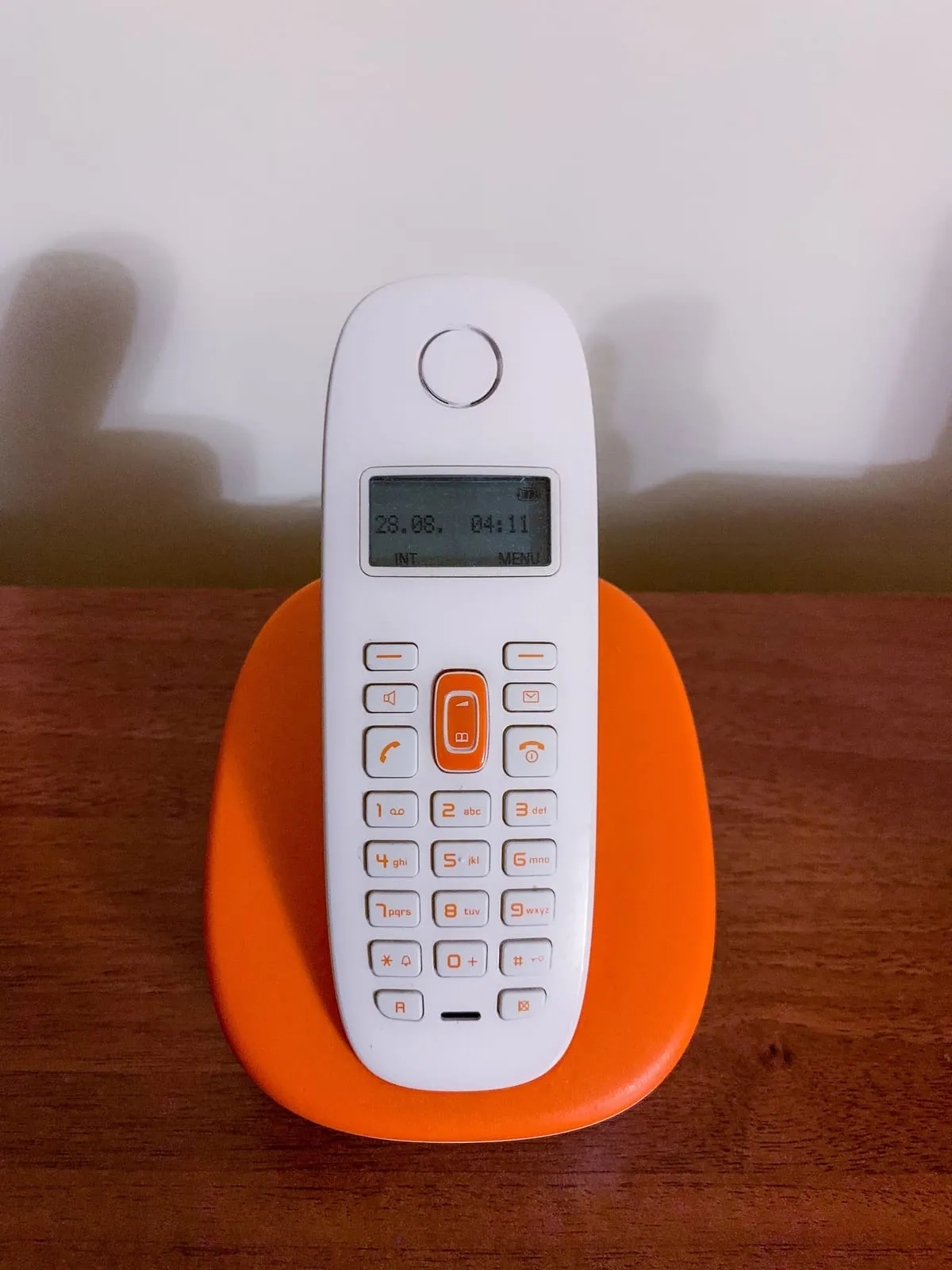 A landlineRings the house. Only the house.Keeps working on copper in an outageKafonoYour cell rings tooSpam screened firstVoicemail, written out
The same six moments on a landline and on Kafono. Kafono is ahead in four, a landline in one, and one is a draw.
Every phone in the house rings.
Screened first. A caller you don’t know presses 1 before anything rings, at the level you pick.
Call screeningIt rings an empty house.
Whatever your phone company offers, often a number to dial in and listen.
It waits until you’re home.
Call from the app, and the school sees the house number.
A corded phone on copper often keeps working.
The house phones need power for the router and adapter. A battery backup keeps them up; the app on your cell keeps taking calls.
It sends the line’s address.
Kafono is ahead on four rows and a landline on one. The rest are much the same, or depend on your plan.
How a landline does depends on your phone company and your plan. Kafono’s side is what every Kafono home plan includes. Read the full guide.
Answer them and we’ll say it plainly: switch now, plan first, or wait.
Your answer shows here.
So far, so good.
Switch now.
Plan first, then switch.
Wait for now.
Check your number in a few seconds. You’ll know it can come before you pay anything.
Rather talk it through? Write to us and a person answers.